
Making Space at Home Before the New Year
Making space around your home before the new year doesn’t require a complete overhaul. Most...

Londoners turn to self-storage for many reasons—moving between homes, creating extra space in a flat, or storing belongings during travel. Whatever the situation, one decision shapes the entire experience: choosing the right storage unit size.
The challenge is that storage units vary widely, from lockers that hold a few boxes to large spaces capable of storing the contents of an entire home. Picking the right size ensures you pay only for the space you need while keeping your belongings safe and accessible.
Finding the right storage unit size is one of the biggest questions people face when considering self storage in London.
Renting a unit that is too large means paying for unnecessary space every month. On the other hand, choosing one that is too small leads to frustration, wasted time, and belongings crammed into corners without room to move. If you will need to retrieve items often, select a larger unit that allows you to create a clear aisle.
Whether you are moving house, downsizing a one-bedroom flat, or looking to securely store seasonal decorations, sports equipment, or business stock, the right unit size makes all the difference.
Before contacting a facility, take the time to figure out your storage needs. Doing so helps you avoid overpaying and ensures your belongings remain easily accessible. If you anticipate acquiring more items, consider renting a slightly larger unit from the outset to prevent the need to move later.
Consider the following when planning:
For businesses, storage requirements may differ. Archived documents, retail stock, or equipment may require different unit sizes and layouts compared to personal storage. Archive storage facilities offer secure environments for storing important business documents, ensuring they remain safe and organised.
Storage unit sizes are usually measured in square footage, and London facilities provide a wide range of options. These can vary from compact lockers to large units that can hold the contents of an entire home. Units typically come in standardised sizes, so matching your item dimensions to these sizes can aid in selection.
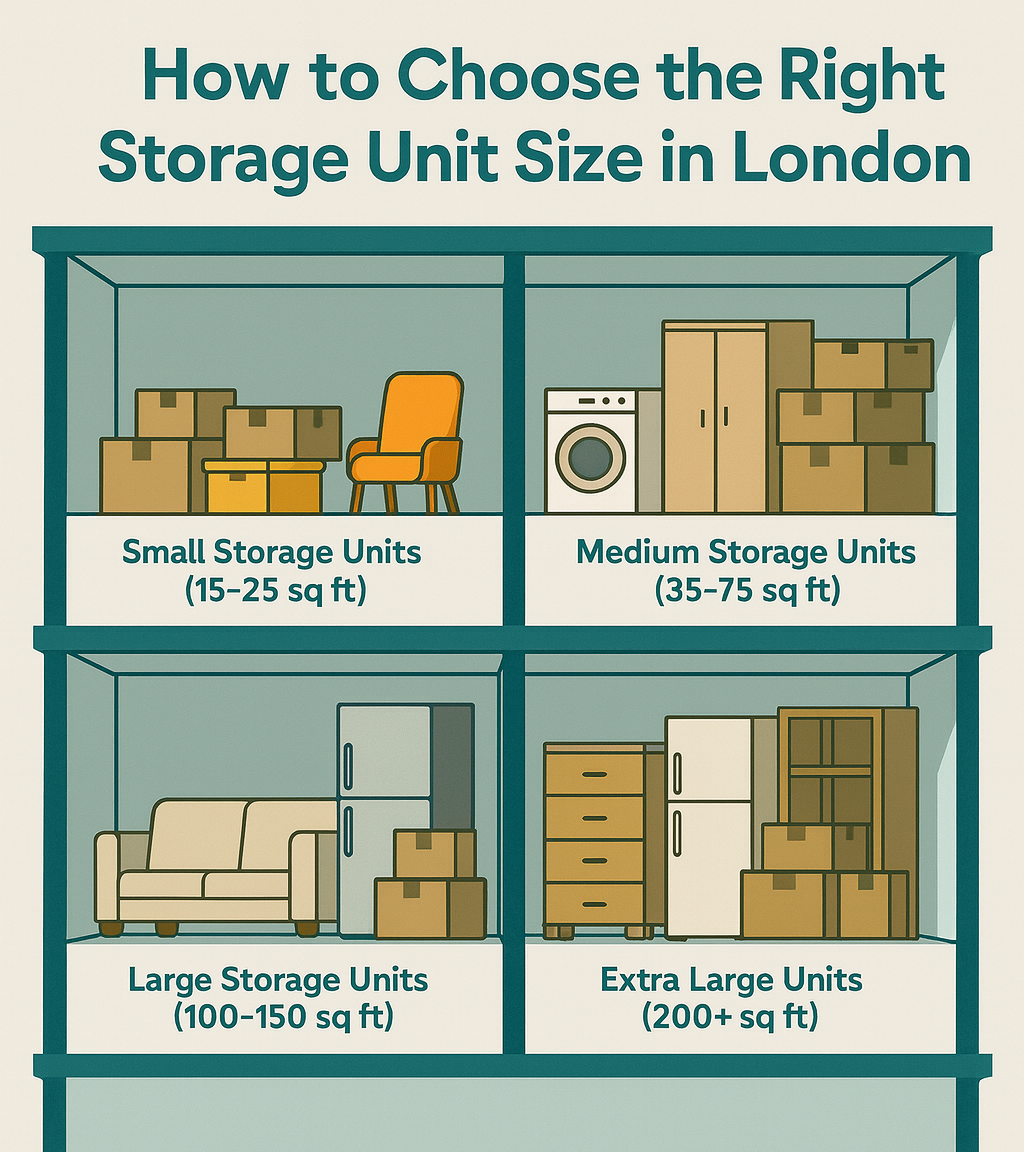
To compare sizes and features across different London facilities, many people use platforms such as WhatStorage, which lists available options throughout the city. Using a storage calculator or our storage size guide can help visualise how much space you’ll need based on your items.
A common guideline is that each bedroom requires approximately 50 square feet of storage space. However, the actual amount depends on how much you own and how you pack.
If you are uncertain, it is often better to choose the next size up. The difference in cost is usually modest, and the extra space makes it easier to keep belongings organised and accessible.
Even an appropriately sized storage unit can feel cramped if it is not packed correctly. Efficient packing ensures that you use every inch wisely while keeping belongings safe.
Finding the right storage space is about more than just unit size. The facility itself makes a big difference in terms of security, convenience, and flexibility. Drive-up self-storage units allow easy unloading and loading of belongings directly from a vehicle, making them a convenient option for those with heavy or bulky items.
Consider the following when comparing options:
Balancing price with these features will help you find the right fit without compromising on safety or convenience. Many storage facilities offer promotions or discounts to new customers, reducing their monthly expenses. It’s worth asking about special deals.
Every individual or business has unique storage requirements. Here are a few examples:
Some of the most common mistakes people make include:
Avoiding these mistakes can save you time, money, and stress in the long run.
Choosing the proper storage unit size in London comes down to planning. Create an inventory of your belongings, measure large items, and determine the level of accessibility you will need. Mobile storage services provide containers delivered to your location for packing at your convenience, offering an alternative to traditional self-storage.
When in doubt, ask facility staff for advice. They cater to a diverse range of customers and can recommend unit sizes tailored to your specific needs.
Most facilities allow you to change sizes if needed so that you can upgrade or downsize later. You can often adjust your storage unit size for free if you find you need more or less space than originally thought. By comparing unit sizes, prices, and features, you can find the right storage space without overspending.
A medium unit of 35–75 sq ft typically accommodates the belongings of a one-bedroom flat, including furniture, appliances, and boxes.
Small units often start at £20–£40 per week, while larger units can cost £80–£200 depending on location, size, and security features. Storage units in London are generally more expensive than those in smaller towns or rural areas.
Yes, most facilities in London allow you to upgrade or downgrade if your needs change.
Some facilities include insurance, but many require you to purchase it separately. Always check before signing a contract.
Yes, many storage facilities offer climate-controlled units, which are ideal for electronics, documents, or sensitive items.
Most facilities provide online calculators, or you can consult staff for guidance.
Generally, yes, but while the cost may be lower, you may sacrifice convenience. If you store belongings outside of London, you may sacrifice convenience for lower costs. Transportation costs can add up if you choose storage units outside London and need frequent access, so consider how often you’ll need to visit your unit.
Pack them in small boxes with clear labels and place them towards the back of your unit if you will not need them often.
London may have limited living space, but self-storage offers a flexible and practical solution. By carefully assessing your storage needs, comparing unit sizes, and packing efficiently, you can ensure your belongings remain secure and accessible without overspending.
With numerous facilities across the city offering diverse features, there is a storage solution for every situation, whether you are a student, a family relocating, or a business seeking extra storage space.
Making space around your home before the new year doesn’t require a complete overhaul. Most...

If you're reading this, chances are you're running out of space. Maybe you're stuck between...

Living in London means making the most of limited space. Whether you're in a flat...

Your e-commerce business grew 200% last year. Your spare bedroom has been converted into a...

Your tenancy ends in three weeks. You're heading home for the summer. Your landlord or...

Finding the right self storage unit in London goes beyond comparing prices and sizes. Location...

London life moves fast. One day you're settled in your flat, the next you're facing...

Moving house in London ranks among the most stressful life events. Between coordinating removal dates,...