
Making Space at Home Before the New Year
Making space around your home before the new year doesn’t require a complete overhaul. Most...
Your e-commerce business grew 200% last year. Your spare bedroom has been converted into a stockroom. Or your office rent just jumped another £500 per month, and you’re wondering how to cut costs without hurting operations.
This is where business storage in London becomes less of an option and more of a necessity. London office space costs £50-£100 per sq ft annually. Storage space costs £10-£20. The maths isn’t complicated.
Growing your business in London means dealing with one constant problem: space costs money. Here’s when companies typically realise they need storage solutions.
Your inventory grew faster than your warehouse. Last year, you stored 50 boxes of products. This year, it’s 200 boxes, and you’re stuffing them under desks. Many small businesses find that self-storage units are a cost-effective way to manage excess stock without committing to expensive warehouse leases.
You’re renovating or relocating offices. Between the old lease ending and the new space being ready, you’ve got nowhere to store your office furniture and office equipment. A storage solution bridges the gap and helps you save money on estate agent expenses for temporary premises. Many businesses find that renting storage units helps them save on estate agent expenses.
Excess inventory is eating up your space. Online retailers know this pain. Your Christmas stock arrives in October but takes up valuable floor space for months. Seasonal products sit around from February. You’re paying premium rent for items that generate zero revenue most of the year. Storage units provide businesses with the flexibility to scale their storage needs up or down in response to changes in demand.
Document storage is mandatory but expensive. Legal firms, accountants, and HR departments must keep important documents for years. Storing filing cabinets in your £ 50-per-square-foot office makes no financial sense. Businesses can utilise storage units for document storage to free up office space and improve organisation.
Equipment storage between projects. Contractors, event companies, and consultants own expensive equipment that sits idle between jobs. Keeping it at your business premises wastes space you’re paying for. Businesses can store excess company equipment in self storage units instead.
You’re downsizing to save money. Many London businesses are moving from a 2,000 sq ft office to a 1,200 sq ft office. The rent savings are substantial, but you still need a place to store the office furniture and equipment. Business storage provides a cost-effective alternative to renting larger office spaces or warehouses. The cost of business storage is significantly lower than the cost of commercial leases or purchasing additional office space.
London offers a wide range of business storage solutions, including traditional self storage, document archiving services, and full-scale warehousing options. Not all commercial storage facilities operate in the same manner.
Self storage facilities let you drive up, unlock your unit, and access your items whenever you need them. You control access completely. Vanguard Self Storage units provide flexible options for businesses that require secure storage with easy access.
Container storage is cost-effective for temporary storage needs and is ideal for businesses with infrequent access requirements. These outdoor units are well-suited for construction companies or companies that store equipment between projects.
Managed storage and warehouse storage services collect your items, store them in their facility, and deliver them back when needed. Warehouse storage and 3PL services streamline inventory management, order fulfilment, and distribution operations for businesses handling larger volumes.
E-commerce storage solutions are specifically designed to meet the needs of online retailers. These facilities recognise that online businesses require additional space to manage inventory and store excess stock. E-commerce storage facilities often provide 24/7 access, enhancing the ease of retrieving products for order fulfilment.
Document archiving services specialise in storing business documents in climate-controlled environments with organised retrieval systems. This works well for professional services with long-term retention requirements.
The right storage solution depends on how often you need access to your items and what you’re storing for business purposes.
Getting the size wrong costs money. Too small and you’ll need a second unit. Too large and you’re paying for space. Multiple companies offer business storage solutions that include various unit sizes to accommodate different business storage needs.
Small offices typically need 50-100 sq ft. This holds 20-30 filing cabinets, several desks, chairs, and boxes of office supplies. You can fit the contents of a small meeting room plus archive boxes.
Online sellers usually need 100-200 sq ft. This accommodates 200-300 product boxes, packing materials, seasonal products, and shipping supplies. E-commerce businesses often underestimate the rate at which inventory grows. Flexible access to stored products is essential for online businesses to manage inventory effectively.
Contractors typically require 150-300 sq ft for storing tools, equipment, and project materials. This size handles power tools, ladders, materials for multiple jobs, and sometimes vehicles.
Retailers require 200+ square feet for excess stock, seasonal displays, and backstock. Fashion retailers storing next season’s collections or furniture stores with overflow inventory typically start here.
Check out this size guide to see what fits in different units. Storage facilities can accommodate the varying storage durations of different businesses. Companies can scale their storage space up or down according to their changing inventory needs. Most facilities let you upgrade if you need more space as your business grows.
Proper organisation of storage units can help businesses easily access their items when needed. Plan your layout before moving in to maximise the space you’re paying for.
Business storage cost varies by location and size. A 50 sq ft unit in Zone 1 costs £80-£120 per week. The same unit in Zone 4-6 costs £40-£60 per week. Location makes a massive difference.
Compare storage costs to your alternatives. Renting 200 sq ft of extra office space in central London costs £200-£400 per week. A 200 sq ft business storage unit costs £60-£100 per week. You’re saving £100-£300 weekly.
Business rates don’t apply to self storage units. You’re renting space, not business premises. This saves you another 40-50% compared to expanding your office. Utilising business storage can help businesses manage excess stock without the cost of larger storage spaces or commercial property.
Watch for hidden costs. Some storage facilities charge administration fees of £15-30 on top of your first month’s rent. Insurance is often mandatory if you don’t already have coverage. Access outside business hours may incur an additional charge at certain facilities.
Long-term storage discounts can save 15-25%. Booking six months upfront instead of monthly can significantly reduce your business storage costs. Ask about commercial client rates when you call. Flexibility and scalability in storage contracts allow businesses to adjust their storage needs without long-term commitments easily.
Many storage companies offer low-cost options for business clients willing to commit to longer terms. The stress-free approach of having a flexible storage contract means you’re not locked into rigid commercial property agreements.
Storage costs in London are cheaper than you think when you compare them to office rent. The key is finding the right location and size for your business requirements.
Security is a top priority for storage facilities, ensuring stored items are safe. All business storage units should have controlled access to ensure that only authorised personnel can access the items stored. Security measures such as CCTV and alarm systems are crucial for protecting inventory in e-commerce storage.
Advanced security measures, such as 24/7 CCTV surveillance, individual unit alarms, intruder alarms, and secure access controls, are standard at quality facilities. Many business storage facilities feature 24-hour security measures, including CCTV surveillance and secure access gates. Enhanced security measures, such as CCTV and access controls, can provide better protection for assets than on-site office security.
Security technology, including keycode access and combination locks, is standard in many business storage units to enhance protection. Access code systems let you control who enters your business storage space. Issue codes to employees who need access and revoke them when staff leave. This beats traditional keys, where you never know who’s made copies.
Regular security checks are conducted on storage facilities to ensure the safety and integrity of stored items. This gives business clients peace of mind that their business belongings are protected.
Some businesses need 24/7 access to their storage. Multiple companies offer business storage solutions that include 24-hour access to storage units. Business storage options often offer 24/7 access, providing greater convenience for businesses that require quick retrieval. If you’re running an e-commerce operation and need to pack orders at midnight, this matters. Business hours access (typically 7 am-7 pm) works fine if you’re storing archived documents.
Businesses require flexible access to their stored items to retrieve or add inventory at their convenience. Having multiple access points in a storage facility can improve the ease of retrieving stored items for businesses. Convenient access saves time when you need to grab equipment or restock inventory.
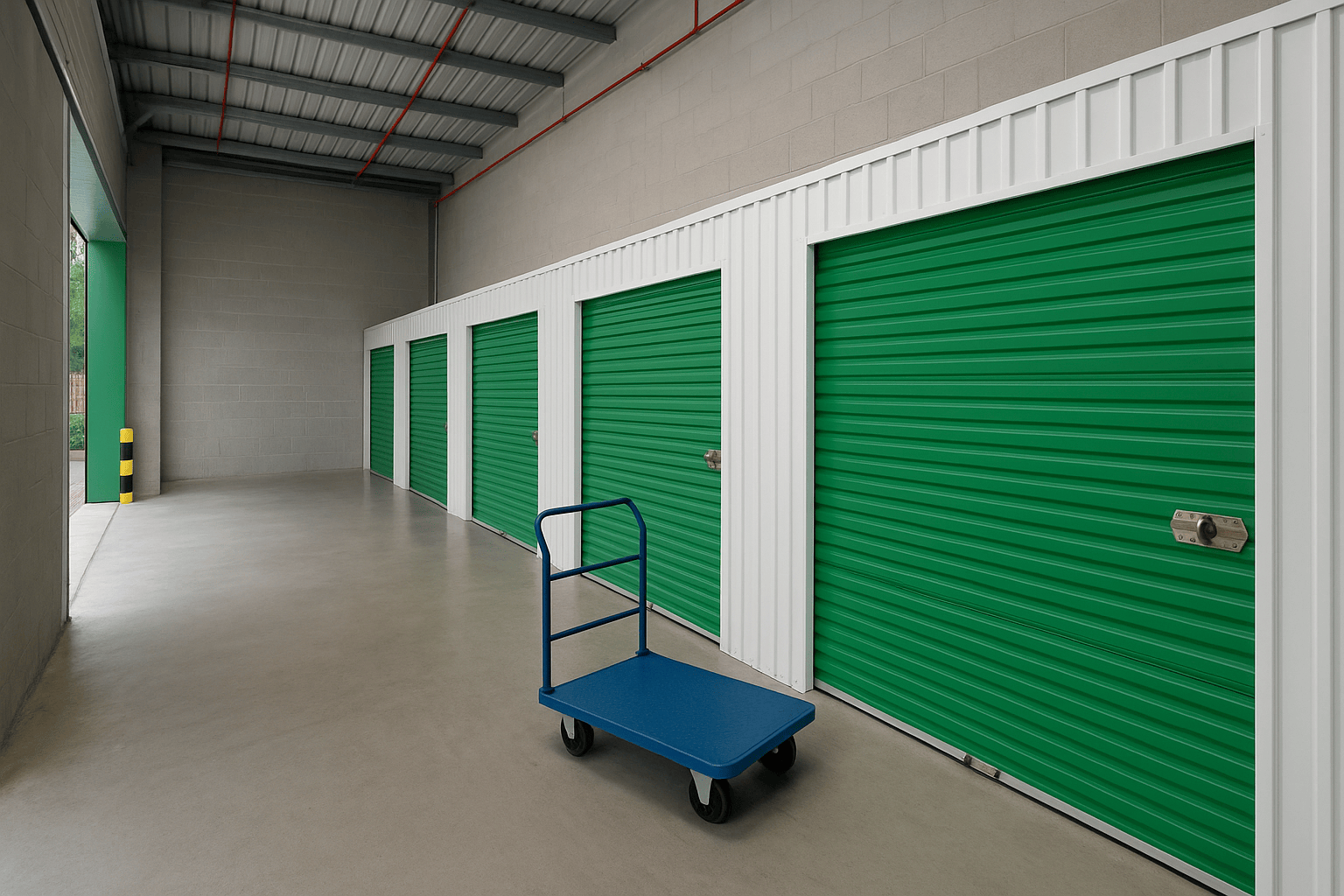
Loading bays make moving stock in and out much easier. Easy access to your unit, with loading facilities, saves time when handling inventory or office furniture. Some facilities have trolleys and pallet jacks you can use, eliminating the need for heavy lifting.
Climate control measures are essential in storage units to protect sensitive documents and valuable equipment from damage. Important documents, such as contracts, financial records, and client files, require proper protection. Climate-controlled units prevent humidity damage and maintain the condition of business documents.
Insurance protects your business belongings. Your commercial insurance might already cover items in storage. If not, facility insurance costs £5-£15 per week, depending on the value you’re protecting.
Learn more about self storage security to understand what protection your business needs.
Location affects both cost and convenience. A storage facility near your office offers quick access, but at a higher price. A location 30 minutes away may cost less, but it adds travel time. Balance convenience against your budget and how often you’ll need access.
Multiple locations help if you have several offices. Some storage companies operate facilities across London so you can store items near each location. Big Yellow Self Storage is a prominent provider with numerous locations in London, offering a range of unit sizes and climate-controlled units with 24/7 access.
Check security features before signing anything. Visit the storage facility and look for cameras, secure gates, good lighting, and on-site staff. Security measures, such as CCTV and alarm systems, are crucial for protecting inventory in commercial storage facilities.
Contract flexibility matters for growing businesses. Some facilities require a minimum stay of three months. Others allow you to rent on a week-by-week basis with no minimum stay requirements. Flexible storage options enable businesses to scale their storage capacity as they expand. Self storage facilities can cater to the varying storage durations by different companies.
Read reviews from other commercial clients. Business clients have different storage needs than personal users. Look for feedback about customer service, the friendly team at the facility, and how they handle business requirements.
Visit the facility before booking. Photos online don’t show everything. Check the cleanliness, access routes, and overall condition. A secure place for your business belongings should feel professional and well-maintained.
Some storage facilities in London allow businesses to scale their storage space according to their needs. Ask about the process for upgrading or downsizing your unit as your business requirements change.
This guide on choosing the right storage unit size helps you avoid common mistakes and find the right storage unit for your specific needs.
Finding business storage space in London used to mean calling dozens of facilities and manually comparing prices. WhatStorage simplifies this by letting you compare all available storage options in one place.
Enter your postcode and required size. You’ll find storage facilities near you, complete with prices, availability, and features—filter by business requirements, such as 24/7 access, loading bays, or climate control.
Read reviews from other business clients to see how storage companies handle commercial storage needs. This helps you avoid places with poor customer service or complex access procedures.
Book directly through the platform or call facilities for custom business rates. Some storage providers offer better deals for commercial clients who book long-term storage contracts.
The booking process, from start to finish, takes minutes once you’ve found the right facility. You can often move in within 24-48 hours for a stress-free storage experience.
What can you store in business storage units? Office furniture, equipment, documents, inventory, and tools are all in good condition. Storage units can be a solution for businesses that need to store excess equipment and inventory. You cannot store items like perishable goods, hazardous materials, or anything illegal.
Do you need insurance? Most facilities require it. Verify if your business insurance policy covers items stored in your premises. If not, facility insurance typically costs £5-£15 per week for adequate protection.
Can multiple employees access the unit? Yes. Most storage facilities allow you to register multiple people and issue each person a unique access code. You control who has access to your business storage space.
What’s the minimum stay? This varies by facility. Some require a minimum three-month stay. Others let you rent on a week-by-week basis. Longer commitments typically result in lower rates and better value for long-term storage needs.
How quickly can you access items? With 24/7 access, immediately. With business hours access, during operating times (usually 7 am-7 pm). Most facilities allow you to access your unit as often as you need for convenient retrieval.
Do facilities have loading bays? Many business storage facilities include loading bays and trolleys. This makes moving stock much easier and eliminates issues with heavy lifting. Ask about this when booking.
Are storage services flexible? Yes. Self-storage units offer flexibility for businesses needing temporary storage solutions or long-term storage options. Flexible storage contracts let you adjust as your business grows or contracts.
For more information, check out the advice section for detailed guides on office storage solutions and commercial storage needs.
Business storage in London helps you save money compared to renting more office space. A 100 sq ft storage unit costs £2,400 to £4,800 per year. The same space in your office costs £5,000 to £10,000 per year. Business storage solutions help free up space in existing office environments, leading to better organisation.
Your next steps are straightforward. Work out how much storage space you need. Check locations near your business. Compare prices and security features at different storage facilities. Visit facilities before booking. Start with a smaller unit and upgrade if needed.
The flexible storage option allows your business to grow or shrink without long-term office lease commitments. When you expand, consider renting additional storage space. When you downsize, reduce it. You’re not locked into expensive property decisions. Storage solutions provide a cost-effective alternative to commercial leases.
Whether you’re an online business managing inventory, a contractor needing equipment storage, or a professional service requiring document storage, storage options are available to meet your specific business needs. The stress-free approach means you stop worrying about space and focus on running your business.
Use self-storage to free up your workspace. Store items you don’t need daily access to in a secure place. Let your team work in an organised environment instead of navigating around excess stock and equipment.
Compare storage facilities now and save money on your London business space costs. Find the proper storage unit for your commercial storage needs and start reducing your overhead today.
Making space around your home before the new year doesn’t require a complete overhaul. Most...

If you're reading this, chances are you're running out of space. Maybe you're stuck between...

Living in London means making the most of limited space. Whether you're in a flat...
Your e-commerce business grew 200% last year. Your spare bedroom has been converted into a...

Your tenancy ends in three weeks. You're heading home for the summer. Your landlord or...

Finding the right self storage unit in London goes beyond comparing prices and sizes. Location...

London life moves fast. One day you're settled in your flat, the next you're facing...

Moving house in London ranks among the most stressful life events. Between coordinating removal dates,...